The pre-owned market is one of the smartest places to buy a watch, offering more quality for your money and access to discontinued pieces you cannot get new. It also rewards patience and punishes haste, because a used watch can hide wear, replaced parts, or worse. This step-by-step checklist helps you move through a purchase methodically so you protect both your money and your peace of mind.
Step One: Vet the Seller Before the Watch#
Long before you inspect a single detail of the watch, study who is selling it. A trustworthy seller dramatically lowers your risk, while a sketchy one can turn even a genuine watch into a bad deal.
- Reputation: Look for established sellers with verifiable feedback, time in the market, and a public presence you can check.
- Return policy: Favor sellers who offer a clear return window. The ability to send a watch back after independent inspection is one of your strongest protections.
- Communication: Honest sellers answer specific questions, provide extra photos on request, and do not pressure you to decide quickly.
If you are buying through a marketplace, prefer payment methods and platforms that offer buyer protection. Verify both the authenticity of the watch and the seller before you commit, and treat reluctance to share information as a warning sign.
Step Two: Inspect the Case and Crystal#
With photos or the watch in hand, work over the exterior carefully. Honest wear is normal on a used piece, but you want to understand what you are paying for.
- Case condition: Check for deep scratches, dents, and signs of heavy polishing. Over-polishing rounds off crisp edges and can reduce a watch's value and originality.
- Crystal: Look for chips or cracks, and note whether it is sapphire, mineral, or acrylic, since replacement cost varies.
- Crown and pushers: They should operate smoothly. A crown that screws down should thread cleanly without grinding.
- Lugs and bracelet: Inspect for stretch in the bracelet and play in the lug holes that can indicate hard use.
Step Three: Examine the Dial and Hands#
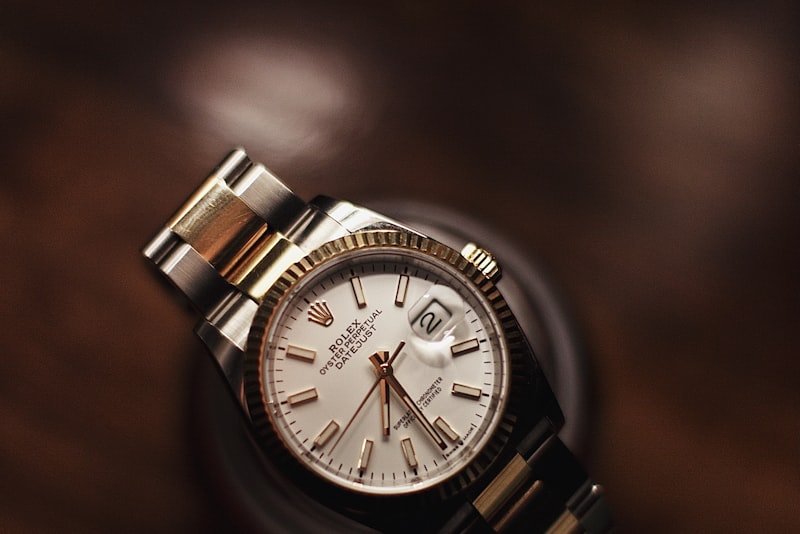
The dial is where counterfeits and undisclosed swaps often reveal themselves, so study it under good light or magnification. Printing should be crisp and evenly spaced, with no smudging or misaligned text. The hands should match the watch's correct configuration and align properly with the markers.
Be alert to refinished or redialed watches. A dial that looks too perfect for the watch's age, or whose font and detailing seem slightly off, deserves extra scrutiny. Lume that looks freshly applied on an otherwise older watch can also signal restoration work that should be disclosed.
Step Four: Confirm the Movement Runs Correctly#
The movement is the heart of the value, so do not skip it. If you can handle the watch, listen and observe how it behaves.
- An automatic should wind via wrist motion and run for a reasonable power reserve once fully wound. The seconds hand on a mechanical movement typically sweeps smoothly rather than ticking once per second.
- A quartz watch should keep accurate time and may tick in one-second increments. A stopped quartz watch could simply need a battery, but confirm before assuming.
- Set the time and let it run, if possible, to check that it keeps reasonable accuracy and that the date and other functions change correctly.
When you cannot inspect the movement yourself, a service from a qualified watchmaker after purchase is worth budgeting for. Follow the manufacturer's servicing guidance, since a used watch of unknown service history may be due for attention.
Step Five: Ask for Papers, Records, and Provenance#
Documentation does not guarantee authenticity, but it adds confidence and protects resale value. Ask the seller a clear set of questions:
- Do you have the original box and papers or warranty card?
- Are there service records, and when was the last service?
- Why are you selling, and how long have you owned it?
- Can you provide the serial and reference numbers and clear photos of them?
Honest answers, consistent details, and a paper trail all point toward a clean watch. Gaps are not automatically disqualifying, but they should be reflected in the price and your level of caution.
Step Six: Sanity-Check the Price and Close Safely#
Research recent selling prices for the same reference in similar condition so you know what fair looks like. A price far below the going rate is rarely a gift, and is one of the most common lures in scams. Remember too that a watch is not a guaranteed financial investment, so buy something you want to wear rather than gambling on future gains.
When you are ready to pay, use a method that offers recourse, keep records of the conversation and listing, and confirm shipping is insured and trackable. If the seller agreed to a return window, plan to inspect the watch promptly on arrival so you are protected.
Conclusion#
Buying pre-owned safely is mostly about slowing down and following a process. Vet the seller, inspect the case and dial, confirm the movement, gather documentation, and verify the price against the real market before you pay. Work through each step honestly and the used market becomes what it should be: a place to buy more watch for your money with your eyes wide open.