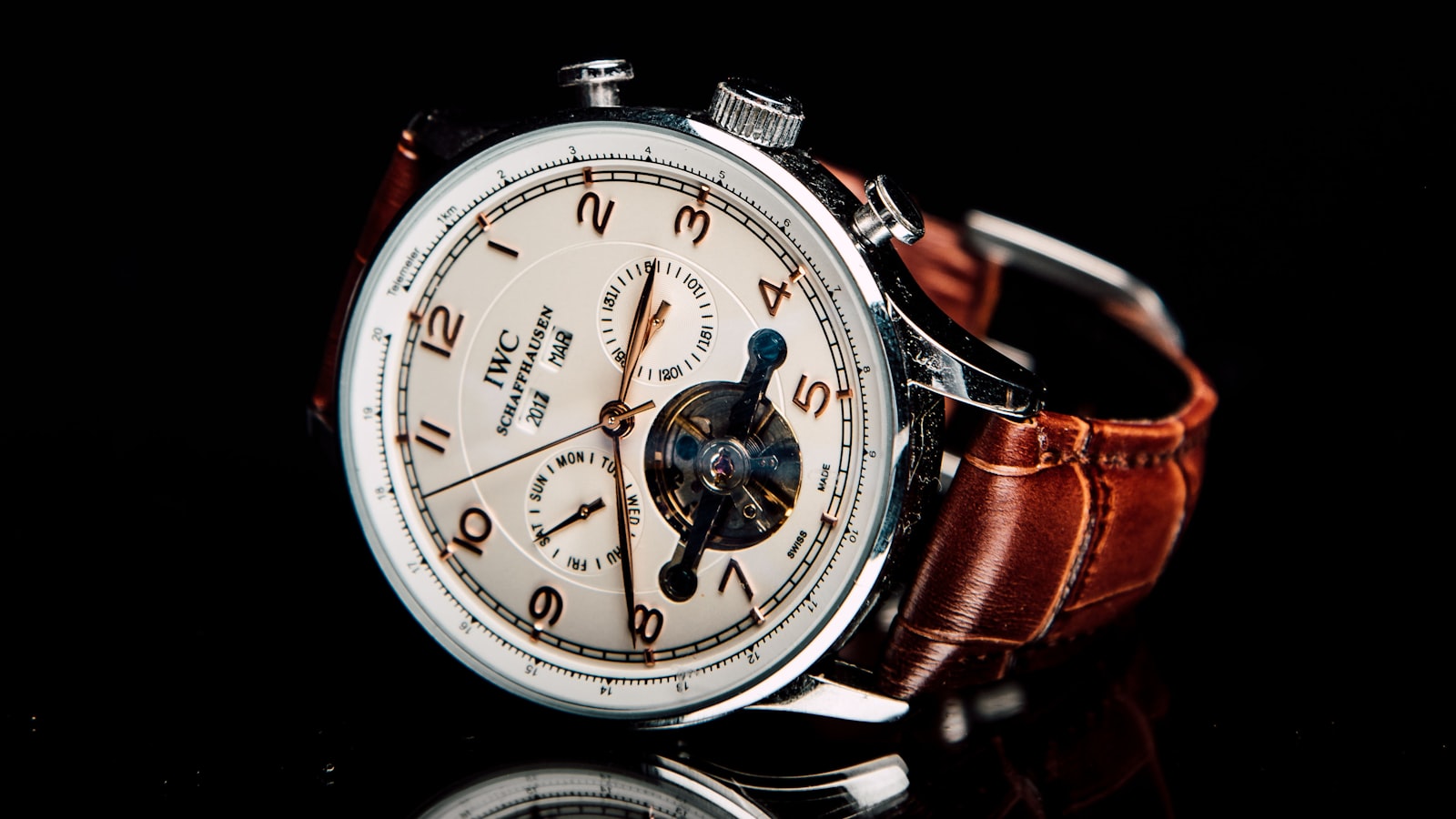
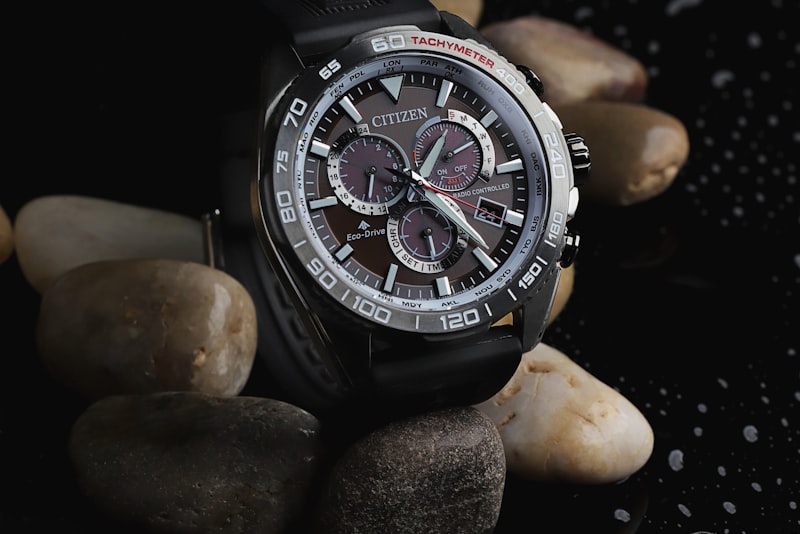
When people talk about watch "movements," they mean the engine inside the case that actually keeps time. The three you will meet most often are quartz, automatic, and hand-wound mechanical, and each offers a genuinely different ownership experience. None is objectively best; the right choice depends on how accurate, low-maintenance, or hands-on you want your watch to be.
Quartz: Accurate and Low Effort#
A quartz movement runs on a small battery that sends current through a tiny quartz crystal. The crystal vibrates at a precise frequency, and the circuit counts those vibrations to drive the hands. This is why the second hand usually ticks in distinct one-second steps rather than gliding.
The standout strengths of quartz are:
- Accuracy. A typical quartz watch is accurate to within around 15 seconds per month, far better than most mechanical watches manage in a single day.
- Low maintenance. There is no mainspring to service on the same schedule. The main upkeep is a battery change every few years, often handled at the same time as a gasket check.
- Affordability and durability. With fewer delicate moving parts, quartz movements tend to shrug off everyday knocks and cost less to produce.
The trade-offs are mostly about feel and ownership. A quartz watch needs its battery replaced periodically, and it does not carry the mechanical romance that draws many enthusiasts. There are also higher-grade quartz movements, including thermocompensated versions that are accurate to within a handful of seconds per year, so quartz is not only a budget category.
Automatic: Self-Winding Mechanical#
An automatic is a mechanical watch with a clever addition: a weighted rotor that swings as your wrist moves, winding the mainspring as you go about your day. Wear it regularly and it may never stop. Set it down for longer than its power reserve, commonly around 38 to 70 hours depending on the movement, and it will halt until you move it or wind it.
Automatics appeal to people who want the soul of a mechanical watch without daily winding. Their characteristics include:
- A smooth sweeping second hand, typically beating at 28,800 vibrations per hour, that looks gliding rather than ticking.
- No battery to replace, since all energy comes from the wound spring.
- A visible rotor, often shown off through a transparent case back.
Accuracy is the main compromise. A good automatic might run within roughly minus 4 to plus 15 seconds per day, and chronometer-certified examples are held to a tighter standard. They also need periodic servicing as lubricants age, following the interval the manufacturer specifies.
Hand-Wound Mechanical: The Hands-On Choice#
A hand-wound (manual) mechanical watch shares the same core components as an automatic but omits the rotor. To keep it running, you wind the crown yourself, usually once a day. For some owners that daily ritual is the whole point; it is a small, deliberate moment of connection with the watch.
Hand-wound movements offer:
- Thinner cases, in many designs, because there is no rotor adding bulk.
- A clear view of the movement through the case back, unobstructed by a rotor.
- The same mechanical character as an automatic, including the sweeping second hand.
The downsides mirror those of automatics: similar accuracy limitations and the same need for regular servicing. Add the discipline of remembering to wind it, since letting it stop is harmless but means resetting the time.
How They Compare at a Glance#
Thinking about your daily habits usually points to the right answer.
- For accuracy and grab-and-go simplicity, choose quartz. It is the most precise and the least demanding.
- For mechanical character without a daily chore, choose an automatic, especially if you wear a watch most days.
- For the most engaged, traditional experience, choose a hand-wound mechanical and enjoy the ritual.
Cost and Long-Term Ownership#
Quartz watches are generally the most economical to buy and to keep running. Mechanical watches, whether automatic or hand-wound, tend to cost more upfront and carry ongoing servicing costs as the years pass. Factor that servicing into your decision rather than only the purchase price.
It is worth being honest about value here: a watch of any type is not a guaranteed financial investment, and this is not investment advice. Some mechanical pieces hold their value well and a few appreciate, but plenty do not, and resale outcomes are unpredictable. Buy the watch because you want to wear and enjoy it.
If you are considering pre-owned to stretch your budget, take extra care. Verify the watch's authenticity and the seller's reputation before buying, ask for service history where possible, and be wary of deals that look too good. A trusted dealer or a watch with documented provenance is worth paying a little more for.
Matching the Movement to Your Lifestyle#
A few practical questions can settle the decision:
- How much do you care about precision? If being off by even ten seconds bothers you, quartz wins easily.
- Do you rotate between several watches? Automatics stop when set aside, so a frequent rotator might prefer the convenience of quartz or a watch winder, while a daily-wear watch is a natural fit for an automatic.
- Do you enjoy fiddling with your gear? If yes, hand-winding is a feature, not a chore.
Whatever you choose, follow the manufacturer's guidance on water resistance and servicing for your specific watch, since recommendations vary by model.
Conclusion#
Quartz, automatic, and hand-wound mechanical movements each solve the same problem in a distinct way. Quartz delivers precision and ease, automatics blend mechanical charm with convenience, and hand-wound watches reward those who like to stay involved. Decide which of those experiences fits your wrist and your routine, and the rest of the choice gets a lot simpler.